
Give Your Lawn a Headstart: Fertilize Your Lawn in the Fall

Fertilizing not only helps your lawn right away, it also provides lasting benefits that last throughout the season. Fertilizing can be done at any time of the year, but experts agree that the best time for this chore is in the fall.

Why Fall?
Grass grows in a “double mountain” pattern. Growth takes off in spring, peaks in early June, and then declines through the end of the summer. When the weather cools off in autumn, there is a second burst of growth before the winter sets in.
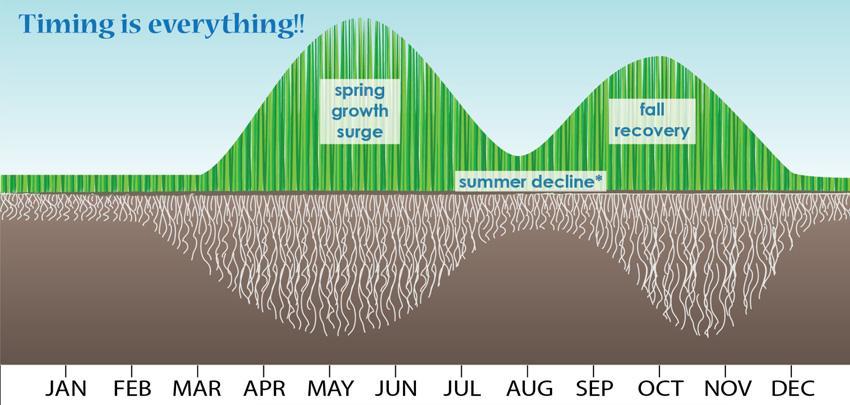
When fertilizer is applied before a period of active growth, it can be more beneficial for your grass. Lawns fertilized in the fall take advantage of the fall recovery period to grow better root systems and store nutrients. Deeper roots will make your lawn more resistant to drought, disease, and weeds. Plus, the fall weather will help grass store energy reserves that will give your lawn a head start next spring.
Fall can also be a good time for other lawn maintenance, like overseeding.
Before fertilizing, conduct a soil test. Soil samples should be around six inches deep, and they should be collected from about eight to 10 areas throughout the yard. These samples will tell you the soil’s pH, which will let you know what nutrients are present and which will need to be added back in. You can buy a testing kit at your garden center, or send your sample to the Soil Testing Laboratory at the University of Minnesota.
After testing your soil and determining the correct amendments to make to your soil, you can apply fertilizer to your lawn. Follow the directions carefully and do not use too much! Check the forecast before you start. Avoid fertilizing your lawn before heavy rainfall to prevent runoff. Not only is fertilizer runoff bad for water systems, if your fertilizer washes away there will be no nutrients left for your lawn!
While the chemistry can be a little intimidating, fertilizing your lawn in the fall is one of the best things you can do to encourage healthy growth and overwintering.