
Fall Landscape Maintenance, Preparation and Planning in Minneapolis
Summary
This guide from Southview Design covers fall lawn care and landscape maintenance for Minneapolis — specifically the sequencing, stakes, and Minnesota-climate reasoning behind each task. The hard freeze arrives as early as mid-October, giving homeowners a 6–8 week window to complete aeration, overseeding, fertilizing, cleanup, and irrigation winterization in the right order. Miss the window and the consequences show up the following spring.
Key Takeaways
• Fall lawn care matters more than spring in Minneapolis. Spring is recovery. Fall is prevention — the work done now determines whether the lawn, plants, and hardscape survive a Twin Cities winter intact.
• The fall maintenance window is 6–8 weeks and closes abruptly. The average first frost in Minneapolis arrives around October 15. Aeration, overseeding, fertilizing, and irrigation blow-out must all be sequenced before that date.
• Fall aeration and overseeding outperform spring treatment for Minnesota lawns. Warm soil temperatures, lower weed pressure, and cooler air make late August through mid-September the optimal window.
• Two-application fall fertilizing is the professional standard in the Twin Cities. A mid-September root-building application followed by a late October winterizer gives lawns the carbohydrate reserves to survive dormancy and green up strongly in spring.
• Irrigation winterization is not optional. One hard freeze with water in the lines can crack heads, split laterals, and damage backflow preventers. Repair costs in Minneapolis typically run $200–$800+.
• Not all perennials should be cut back in fall. Ornamental grasses and borderline-hardy Zone 4b perennials benefit from leaving top growth as insulating mulch through winter.
• Anti-desiccant spray for broadleaf evergreens is an often-skipped essential. Boxwood, holly, and rhododendron in exposed Twin Cities locations regularly suffer winter burn without it.
Topics Covered
Fall lawn care timing and sequencing · Lawn aeration and overseeding · Fall lawn care schedule · Fall fertilizing strategy · Fall cleanup landscaping · Irrigation winterization · Winterizing your lawn · Tree and shrub protection · Fall yard cleanup Minneapolis · Professional fall maintenance services
Who This Is For
Minneapolis and Twin Cities homeowners in the August–October window who want a locally grounded, sequenced guide — not a generic national checklist. Especially relevant to homeowners with established landscapes, irrigation systems, and outdoor hardscape where fall preparation directly determines the quality of the following spring.
Author / Source
Southview Design — a St. Paul-based landscape design-build firm serving the Twin Cities metro, with a maintenance division handling seasonal fall and spring care for residential properties.
Fall lawn care in Minneapolis operates on a timeline that most national guides never acknowledge: the hard freeze arrives as early as mid-October, and the window between summer’s end and the first killing frost is roughly six to eight weeks. In the Twin Cities, that window is when every critical fall task — aeration, overseeding, fertilizing, cleanup, and irrigation winterization — needs to happen in a specific sequence. Miss the order, and you lose the benefit. Miss the window entirely, and the consequences arrive the following May: thinning turf, winter-killed plants, and cracked hardscape.
Use the links below to jump directly to any section of our guide:
- Why Fall Is the Most Important Season for Your Minneapolis Landscape
- The Minneapolis Fall Maintenance Timeline
- Lawn Aeration and Overseeding
- Fall Fertilizing
- Fall Cleanup
- Irrigation Winterization
- Protecting Trees, Shrubs, and Perennials
- When to Call Southview Design for Fall Services
Why Fall Is the Most Important Season for Your Minneapolis Landscape?
Spring lawn care gets the attention, but fall landscape maintenance is where the work that actually determines next year’s health happens. In Minneapolis, the stakes are higher than in most of the continental US: Zone 4b winters regularly push soil temperatures to extremes, turf and plants that were not properly hardened suffer significant damage, and irrigation systems left with water in the lines can be substantially damaged by a single hard freeze.
Homeowners who skip fall preparation face three predictable spring consequences: thinning turf from unaddressed soil compaction, winterkill in plants that were not given time to harden off, and hardscape damage from water left in lines and joints before the freeze. A proper fall clean-up addresses all three before the ground freezes.
This guide covers the stakes, the timing logic, and the Minnesota climate reasoning behind each seasonal recommendation. For a task-by-task format, the Minnesota fall cleanup checklist covers the step-by-step details. This article covers why the sequencing matters and what the cost of getting it wrong looks like.
The Minneapolis Fall Maintenance Timeline: Working Backwards from First Frost
Every fall lawn care decision in the Twin Cities should be made relative to one date: the average first frost in Minneapolis, which falls around October 15. The National Weather Service Twin Cities office tracks historical frost data for the metro — the specific date shifts year to year, but mid-October is the planning anchor.
• Late August to mid-September: Aeration and overseeding. Soil is still warm enough for germination; weed pressure is low; cooler air reduces new-seed stress.
• Mid-September: First fall fertilizer application. Root-building formulation to support carbohydrate reserves heading into dormancy.
• Late September to early October: Leaf management begins. Mowing frequency adjusts to match slowing growth rates.
• Late October after growth stops: Winterizer fertilizer application and final mowing at the correct height.
• Before hard freeze (typically mid-October): Irrigation blow-out. Anti-desiccant spray for broadleaf evergreens.
The specific dates shift annually, so a fall lawn care schedule built on fixed calendar dates will fail in an early-frost year. Southview’s fall maintenance clients benefit from professional scheduling that monitors actual soil temperatures and frost forecasts rather than the calendar.
Lawn Aeration and Overseeding: The Foundation of Fall Lawn Care in Minnesota
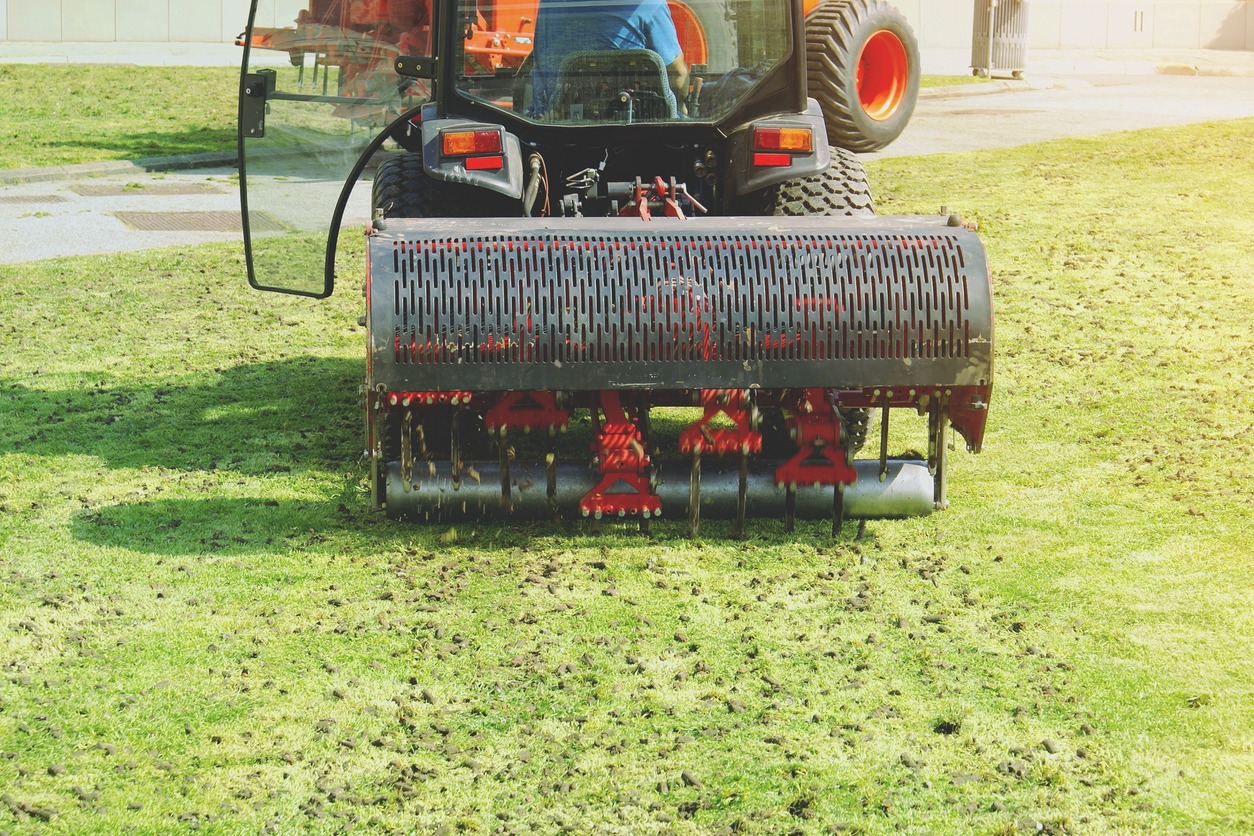
Fall aeration outperforms spring aeration for most Twin Cities lawns. Soil temperatures in late August and September remain above 50°F at four-inch depth — the threshold for cool-season grass germination — while crabgrass and summer annuals are dying back, reducing weed competition. Cooler air temperatures also reduce stress on newly seeded areas compared to spring overseeding.
Most Minneapolis metro lawns — especially on clay-heavy soil in the western suburbs from Minnetonka through Eden Prairie — benefit from annual core aeration, which pulls cylindrical plugs from the surface and reopens channels for water, air, and nutrients that freeze-thaw cycling and foot traffic have closed.
Overseeding immediately after aeration maximizes the benefit: aeration cores create ideal seed-to-soil contact, and seed dropped into the channel reaches mineral soil rather than thatch. The step most homeowners miss is moisture management in the two to three weeks post-seeding — new seed requires consistent surface moisture, which in a typically dry Twin Cities September means supplemental irrigation.
Fall Fertilizing: Getting the Timing Right for a Minnesota Winter
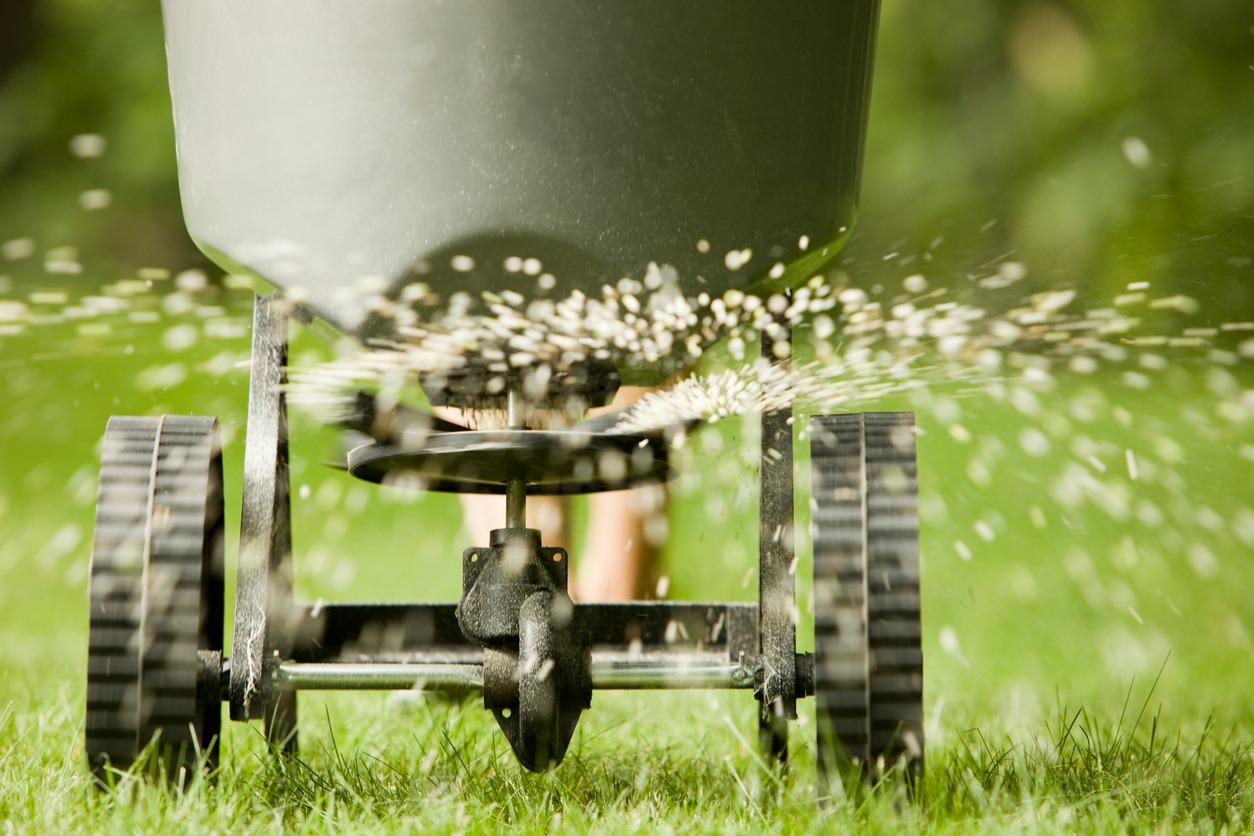
Fall fertilizer applications serve a fundamentally different purpose than spring or summer treatments. The goal is not top growth — it is root mass and carbohydrate reserves before dormancy. A high-potassium, lower-nitrogen formulation applied at the right time is worth far more to a Minnesota lawn than a heavy nitrogen application that stimulates soft late-season growth. That soft growth is precisely what makes turf vulnerable to snow mold pathogens — both pink and grey snow mold are common in the Twin Cities — over a long winter.
The two-application approach that professional fall lawn maintenance programs in Minnesota use: a mid-September application targeting root development, followed by a late October winterizer after the lawn has largely stopped growing but while the soil is still absorbing nutrients. Late-season roots continue taking up nutrients after top growth has gone dormant, building the reserves that fuel the following spring’s green-up.
Over-fertilizing with high-nitrogen products applied too late is one of the most common fall lawn care mistakes in the Twin Cities — it stimulates soft growth that the plant cannot harden off before freeze, which is what snow mold exploits. For specific product and rate guidance, see our fall fertilizing guide.
Fall Cleanup: Reasoning Through Leaves, Beds, and Cutting Back
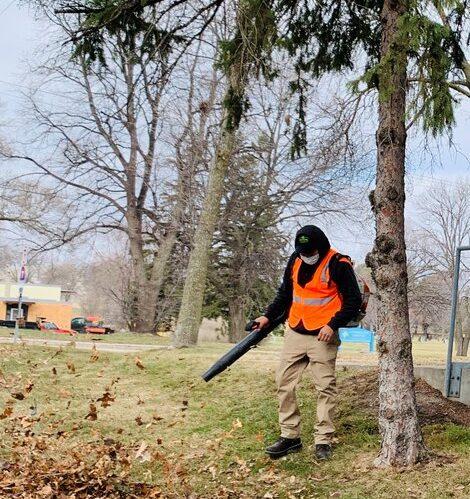
Fall cleanup landscaping in Minneapolis requires more judgment than a checklist suggests. What to do about fallen leaves comes up most often: a thick mat left on a Minnesota lawn through winter creates two predictable problems. It promotes snow mold by creating the humid, anaerobic conditions the fungus favours. And it suffocates turf by blocking light and gas exchange as it compresses under snow. In a heavy canopy fall typical of many south Minneapolis and Edina neighbourhoods, mulch mowing alone is rarely sufficient.
Mulch mowing is acceptable when the leaf layer is thin enough to decompose before it mats — a half-inch of finely chopped material breaks down; a two-inch partially shredded layer will mat and harbour disease. Properties with significant oak or maple canopy typically require full removal.
Cutting back perennials is not a universal recommendation in Zone 4b. Ornamental grasses and borderline-hardy perennials benefit from leaving top growth through winter — it insulates crowns and traps insulating snow. Cut back plants that harbour disease or produce material dense enough to mat over the crown.
Fall cleanup is also the right time to inspect outdoor room hardscape — paver joints, retaining wall caps, and stone work — for any shifts or gaps that freeze-thaw cycles will worsen over winter. Addressing them now costs a fraction of what remediation would cost after a hard winter. For homeowners who have invested in an outdoor room hardscape, see protecting your outdoor room through winter. For the full task-by-task fall cleanup checklist, see our Minnesota fall cleanup checklist.
Irrigation Winterization: The Step Minneapolis Homeowners Skip at Their Peril
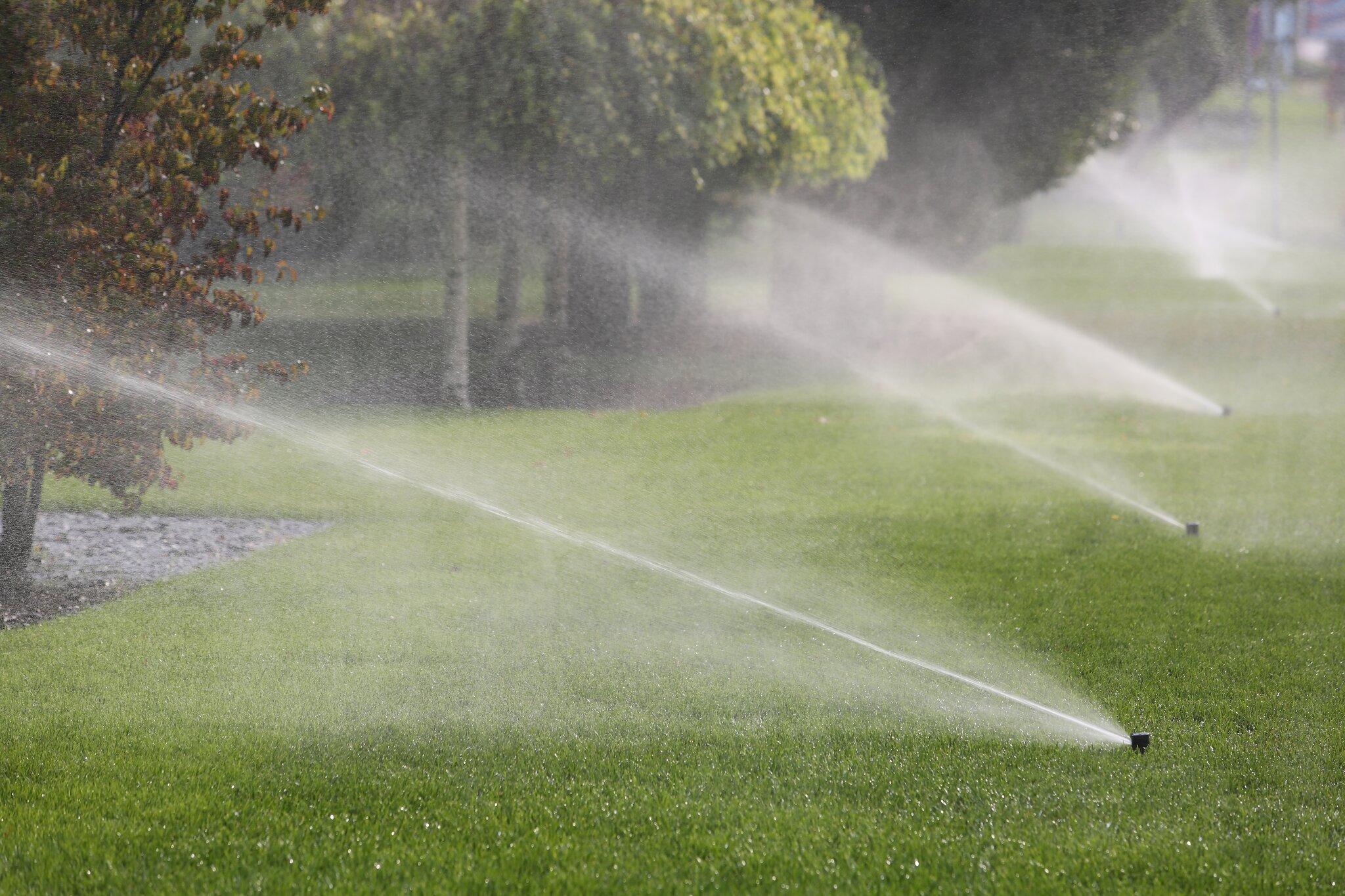
A single hard freeze with water remaining in irrigation lines can crack heads, split lateral lines, and damage backflow preventers — repair costs in the Twin Cities typically run $200–$800+. Winterizing your lawn irrigation system is not optional, even if October looks mild. The swing from a warm afternoon to a hard overnight freeze is real, and damage happens in hours.
The blow-out process uses compressed air to purge all water from zones, heads, and the main line. It requires a commercial-grade compressor and zone-by-zone sequencing to ensure complete purging without damaging heads — not a DIY task for systems with multiple zones and backflow preventers, which covers most professionally installed systems in the metro.
Timing: before the first hard freeze, but after the last significant fall watering need — typically mid-October, though the window varies by year. Systems serving areas with late-cycle fall overseeding need to stay active longer, which can narrow the closing window. Southview’s maintenance division handles irrigation winterization as part of fall service packages. See our irrigation winterization service for details.
Don’t lose your fall window. Contact Southview to schedule fall cleanup and maintenance for your Minneapolis property.
Protecting Trees, Shrubs, and Perennials Before the Minneapolis Winter
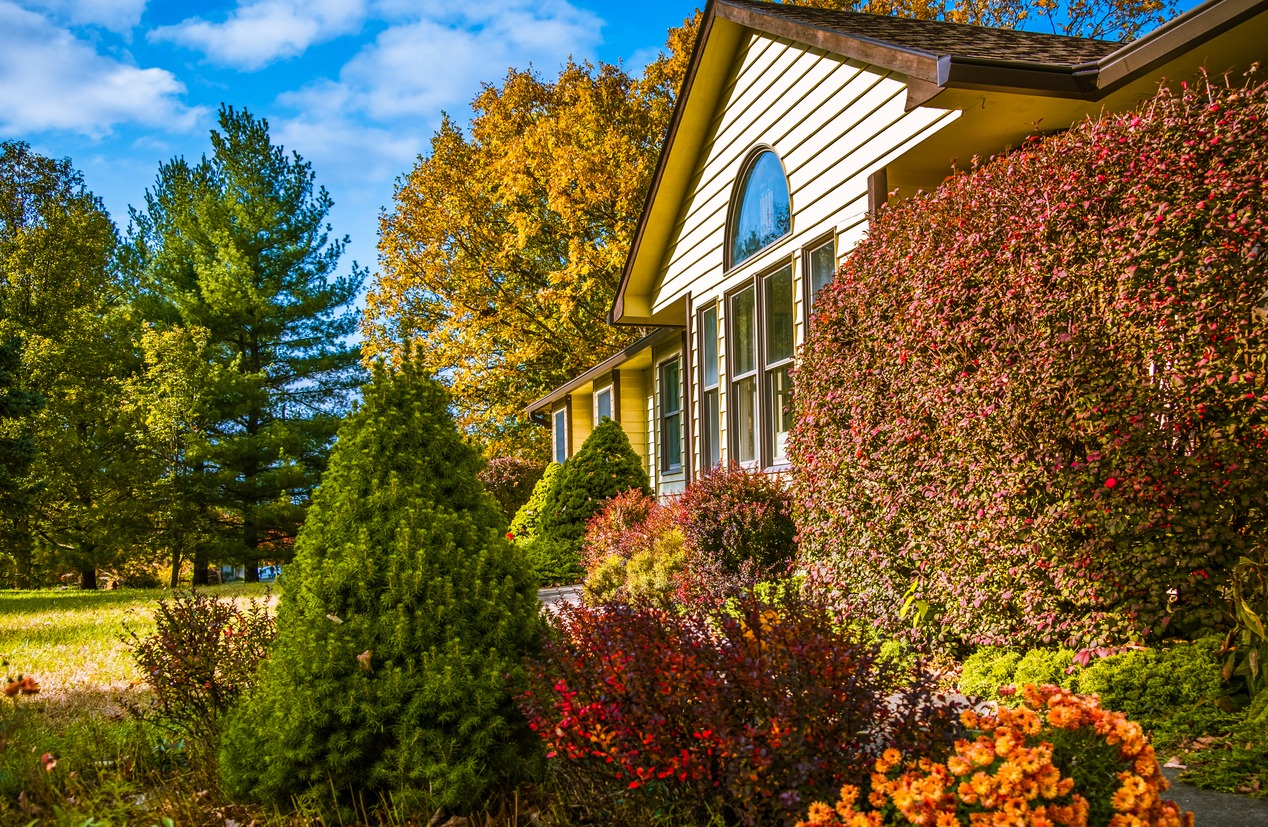
Anti-desiccant spray for broadleaf evergreens — boxwood, holly, rhododendron — is one of the most skipped fall tasks and one of the most consequential. In exposed locations, winter sun and wind accelerate transpiration while frozen ground prevents water uptake, stripping foliage from otherwise healthy plants. Application in late October or November, when temperatures are below 40°F but ground is not yet frozen, forms a protective coating against winter desiccation.
Fall mulching timing matters as much as the mulch itself. Applied too early it traps heat and delays plant hardening; applied after the soil begins to cool in mid to late October it insulates against the temperature swings that cause frost heave and root damage in new plantings.
Young or thin-barked trees benefit from trunk wrap through winter. Sunscald — bright winter sun reflecting off snow onto dark bark — creates freeze-thaw cycles in the cambium layer that can girdle a tree. Trunk wrap from mid-October through April is straightforward prevention. The USDA Plant Hardiness Zone Map places most of the Twin Cities metro in Zone 4b — useful context when assessing whether borderline-hardy specimens need additional winter protection.
New trees and shrubs planted in the fall are the highest-risk category for winter loss. Their root systems have not yet established adequately to sustain the plant through a hard winter without supplemental moisture. Deep watering through October until the ground freezes significantly improves survival rates. For timing and volume guidance, see our fall watering guide.
When to Call Southview Design for Fall Services in Minneapolis?
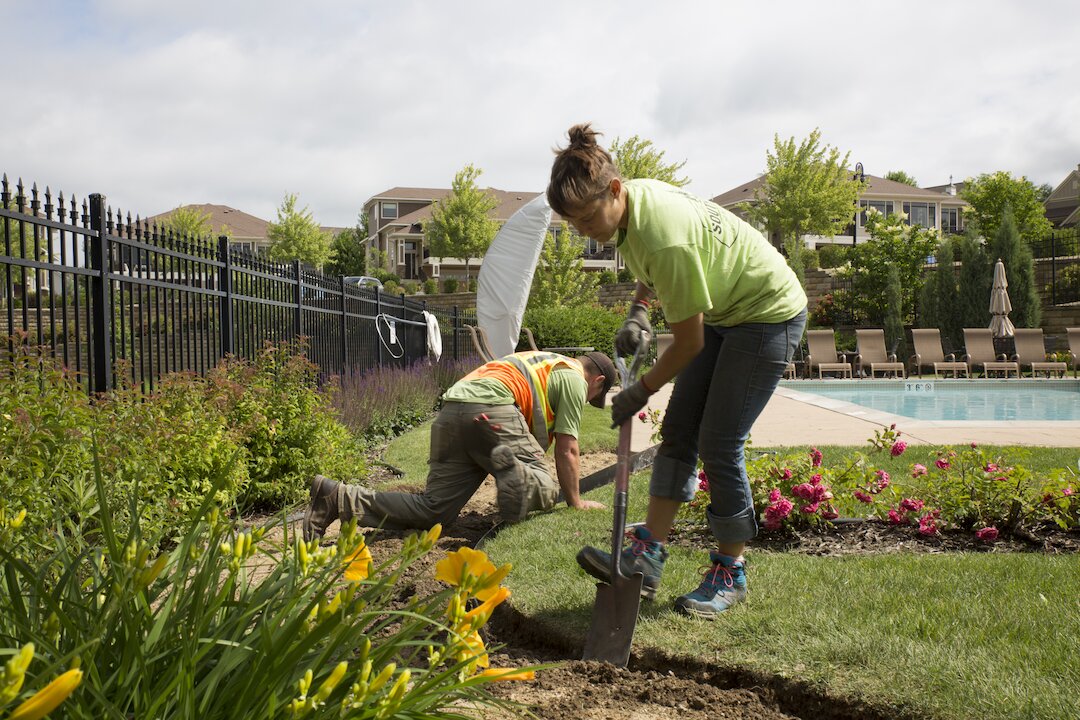
Fall care in Minneapolis is a sequencing problem as much as a task problem. Three categories of homeowners consistently benefit from professional help:
Homeowners with complex landscapes — outdoor rooms, retaining walls, irrigation systems — where DIY winterization carries real damage risk. Homeowners who want fall preparation done correctly the first time rather than managing remediation costs the following spring. And homeowners who consistently run out of time in October, a common reality when early-arriving cold fronts compress the window faster than expected.
Southview’s integrated approach means the same team that designed and built the landscape handles its seasonal fall lawn care. They know where the irrigation zones run, what was planted and when, where the drainage challenges are, and which areas of hardscape need close inspection before freeze-thaw cycles begin. That continuity is the difference between fall maintenance that protects an investment and fall maintenance that misses the details that matter.
See Southview’s landscape maintenance services for fall service packages, scheduling details, and what Southview’s professional fall care covers for Minneapolis and Twin Cities residential properties.
Don’t lose your fall window. Contact Southview to schedule your fall landscape maintenance in Minneapolis.
Tags: